Vegetables
Overview
Vegetables are high-value crops that create economic opportunities for smallholder farmers with limited land. Different vegetable crops offer farmers options to adapt to climate, environmental, and market shocks.
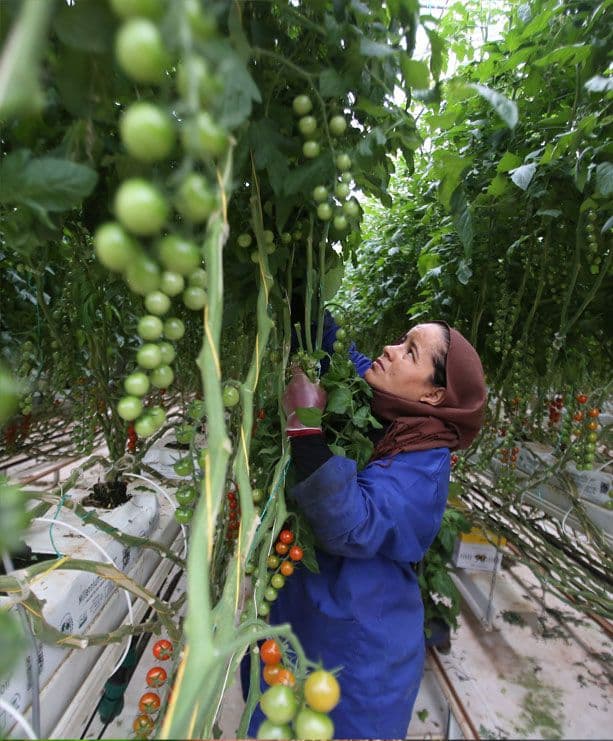
Vegetable value chains are labour-intensive, and generate employment both on farms and in post-harvest processes – particularly benefiting vulnerable populations such as youth and migrants. Fairtrade certifies small and large-scale vegetable production.
Roughly 1.1 billion tonnes of vegetables are produced worldwide each year, with smallholder farmers growing about half of them. The leading producing region is Asia, particularly China, India and Vietnam, followed by Africa with Nigeria and Egypt, and Europe with Spain and Italy.
The salient issues in the vegetable sector are (in the order of saliency):
- Living income & wage
In crops like beans, corn, and potatoes, smallholder farmers and workers typically face low incomes and wages, which do not allow decent working and living conditions.
- Water & Biodiversity
This industry heavily relies on agrochemicals and fertilizers, harming soil, water and biodiversity. It also consumes large amounts of water throughout its supply chains.
- Health
Excessive agrochemical use, together with improper protective equipment usage, leads to poisonings and other serious health issues. Heavy lifting, repetitive tasks and long hours cause musculoskeletal injuries.
- Climate change
Main emission sources in vegetable farming include fertilisers, soil carbon loss, irrigation, fuel use and international transport. Greenhouse production emits far more carbon than open-field farming.
- Working conditions
Vegetable production is labour-intensive and seasonal. Plantation workers often lack written contracts, work on temporary terms, face irregular hours and do not receive overtime pay.
- Child rights
Child labour is identified in the production of corn, beans, potatoes and pulses. Labour shortages may increase the use of child labour, especially in remote areas.
- More information on risks in vegetables

Root causes
Inequal power relations and low prices: Global vegetable producers operate under intense competition and pressure by supermarkets and wholesalers, which reduces producers’ social and environmental investments.
Poverty and lack of alternatives: Due to lack of a living income, farmers cannot always cover all their costs, including labour expenses. For workers, seasonal employment rarely ensures a living wage year-round, Recruitment through brokers reduces accountability for fair wages and protections, leaving migrant workers especially vulnerable to exploitation.
Weak laws and implementation: Many producer countries lack minimum wage legislation or exclude agriculture from such regulations. Furthermore, labour inspectors lack basic resources—such as vehicles and fuel—hindering effective oversight of the sector.
Background data on vegetables (*Global Volume / **Fairtrade Volume)
Largest producer countries*
- China (56%)
- India (15%)
- Vietnam (6%)
- Nigeria (2%)
- Philippines (2%)
- Others (19%)
Data from 2023.
Source: FAOSTAT 2023.
Dominant production model*
Around half of all globally produced vegetables are cultivated by smallholder farmers.
Source: FAO 2020.
Fairtrade certified organizations**
Data from 2022.
Fairtrade certifiable production**
metric tonnes in 2022.
Farmers and workers in Fairtrade organizations**
Data from 2022.

Stay updated
Partnering for change
Companies can be part of the solution by identifying and addressing the most serious risks and root causes in collaboration with farmers, workers and other affected people. Sign up to receive updates as we add new information to this Map, or to hear how Fairtrade can support your corporate sustainability due diligence.
Map View