Cereals
Overview
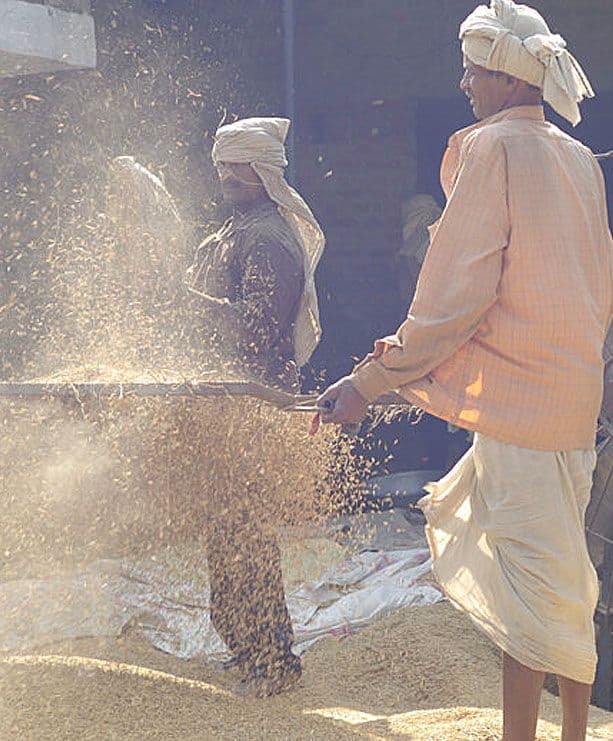
Cereals are one of the world’s largest commodities, essential for food, fuel, and feed. One fifth of the global calory intake is from rice alone. Small farms produce over half of the world’s cereals.
Cereals cause significant environmental impacts: Rice production is estimated to cause over 2% of global warming, and monoculture-based quinoa cultivation causes serious land degradation and biodiversity loss in the Andean region. At the same time, farmers are highly vulnerable to weather fluctuations.
Fairtrade represents with small-holder producers of rice in Asia, amaranth in India, and quinoa in Peru and Bolivia. Domestic consumption is still the main driver of cereals demand, with only 17% of global cereal production traded internationally.
The salient issues in the cereals sector are (in the order of saliency):
- Climate change
Rice paddies supply half the global population with staple food but produce around 2.5% of global warming. Quinoa production has fueled deforestation.
- Water & Biodiversity
Rapidly expanding quinoa production has caused land degradation and biodiversity loss in the Andean countries. Rice production relies on irrigation and agrochemicals, polluting waterways and land.
- Living income & wage
Farmers and workers face low, unstable earnings. Farmers endure unequal value chains that return little to them, combined with rising production costs. Workers typically have insecure, seasonal jobs.
- Working conditions
Working conditions in cereal farming and processing are characterized by informality, limited access to social protection, exposure to extreme heat and chemicals, and inadequate protective equipment.
- Gender equity
Women in cereal value chains face persistent inequalities, including lower wages, limited participation in decision-making, restricted land ownership, and greater exposure to workplace hazards.
- Self-determination
Large agribusiness and land grabbing displace Indigenous and local communities, threatening territorial rights, customary farming, and traditions, though crops like amaranth can help cultural revival.
- More information on risks in cereals

Root causes
Unequal power relations: Smallholder farmers have limited bargaining power with large trader companies and mills. Traders benefit from price fluctuations, while farmers must accept low prices. Large-scale buyers can take advantage of farmers’ lack of market information and limited access to storage, deepening power imbalances.
Climate change: Climate change poses a growing threat to cereal farmers. Rice production is highly dependent on climatic conditions, making it vulnerable to droughts and floods. Quinoa and amaranth are generally more resilient, though high-yield varieties are more vulnerable to these shocks.
Trade informality: Cereal farming is largely informal, and it often lacks national pricing mechanisms. Informality enables unsustainable and harmful market practices.
Background data on cereals (*Global Volume / **Fairtrade Volume)
Largerst rice producer countries*
- India (26%)
- China (26%)
- Bangladesh (7%)
- Indonesia (7%)
- Vietnam (5%)
- Thailand (4%)
- Myanmar (3%)
- Others (19%)
Source: FAOSTAT 2023.
Dominant production model*
Over half of the global cereal production comes from small farms of maximum 20 ha.
Source: Future of Food 2025.
Fairtrade certified producer organizations**
Total number of amaranth, quinoa and rice producer organisations.
Data from 2025.
Fairtrade certifiable production**
metric tonnes of amaranth and quinoa in 2023.
Farmers in Fairtrade organizations**
Total number of amaranth, quinoa and rice farmers. Data from 2025.

Stay updated
Partnering for change
Companies can be part of the solution by identifying and addressing the most serious risks and root causes in collaboration with farmers, workers and other affected people. Sign up to receive updates as we add new information to this Map, or to hear how Fairtrade can support your corporate sustainability due diligence.
Map View