Fruits
Overview
Fresh fruit rank among the most valuable crops in international trade. Fruit production is also crucial for food security, livelihoods and the agricultural economy in most tropical countries, where fruits are mainly produced by smallholder farmers.
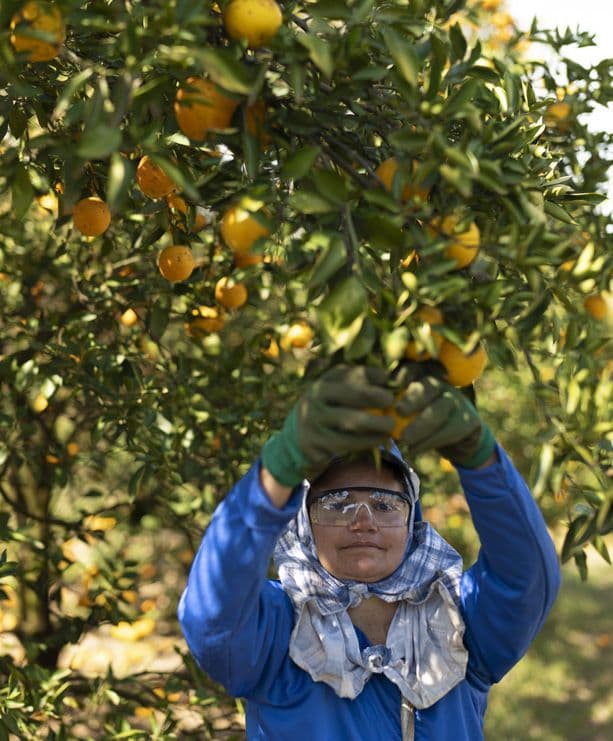
However, global price pressures have fuelled exploitative labour practices, unsafe and unhealthy working conditions, and water scarcity in production worldwide. Fruit production generates high emissions, while climate change often increases unsustainable production. Fairtrade certifies small and large-scale fruit production.
Approximately 1 billion tonnes of fruit are produced globally each year, with 60% of all fruit grown in warm regions. The largest producer countries of Fairtrade fruit are Brazil, South Africa, Egypt, Mexico, Peru, Kenya, and Costa Rica.
The salient issues in the banana sector are (in the order of saliency):
- Living income & wage
Smallholder fruit farmers struggle to earn a decent living due to price uncertainty and competition with larger producers. Wages are insufficient and tied to production targets, at both plantations and small farms.
- Water & Biodiversity
Production demands high water use, especially for avocados, table grapes, and mangoes. Rising plant health issues spur more agrochemical use, biodiversity loss, and degradation of agroecosystems.
- Working conditions
Employment terms are generally weak, particularly for seasonal and migrant workers. Seasonal work is very common. Heat is a serious challenge, for example to pineapple workers.
- Health
Extensive pesticide usage poses health risks to workers and nearby communities, especially when PPE is disregarded. Fruit workers also face injuries from heavy lifting and climbing to tall ladders.
- Gender equity
Women face low pay, limited land ownership, lower access to resources, and harassment. Due to family duties, they can more often obtain seasonal or irregular jobs.
- Climate change
High GHG emissions are due to energy use and pesticide application, and post-harvest processing. Emissions are rising as climate change pushes farmers toward more unsustainable practices.
- More information on risks in fruits

Root causes
Unequal power dynamics and low prices: In fruit supply chains, large supermarkets have much influence over prices and production standards. High quality standards and low prices keep producer incomes low, limiting social and environmental investments.
Climate change: Climate change affects fruit production by altering temperature and rainfall patterns. Rising heat reduces flowering and pollination, while water scarcity lowers yields and excessive rain spreads disease. Higher temperatures also speed up ripening and affect fruit quality. According to Fairtrade’s risk assessment workshops in Latin America 2025, installation of solar panels by some companies and producers is mainly motivated by the reduction of operating costs, although it also results in a lower environmental impact.
Background data on fruits (*Global Volume / **Fairtrade Volume)
Largest tropical fruit producer countries*
- India (21%)
- China (14%)
- Philippines (12%)
- Thailand (12%)
- Brazil (9%)
- Indonesia (8%)
- Bangladesh (5%)
- Others (19%)
Data from 2023.
Source: FAOSTAT 2023.
Dominant production model*
More that half of all globally produced vegetables are cultivated by smallholder farmers
Source: FAO 2020.
Fairtrade certified producer organizations**
Data from 2024.
Fairtrade certifiable production**
metric tonnes in 2023.
Farmers in Fairtrade organizations**
Data from 2023.

Stay updated
Partnering for change
Companies can be part of the solution by identifying and addressing the most serious risks and root causes in collaboration with farmers, workers and other affected people. Sign up to receive updates as we add new information to this Map, or to hear how Fairtrade can support your corporate sustainability due diligence.
Map View